Termites, Mosquitoes, and a Wooden House: The Defense Plan
A hanok is, structurally, food — timber posts in a climate termites enjoy, in a city of summer mosquitoes. The pre-opening pest doctrine we run at Doiok: structural treatment, humidity control, sealed gaps, and always-on defenses guests never notice.
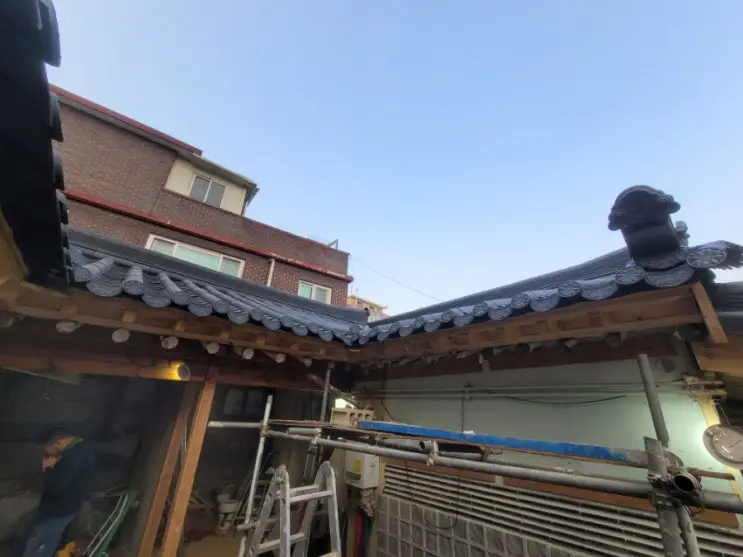
Here is the least romantic sentence we know about hanok ownership: your house is edible. The posts holding up your roof are seventy-year-old softwood, unpressure-treated, standing within a meter of soil, in a climate whose termites are thriving on warmer winters. Every operating hanok deals with this; almost nobody writes it down. Our mentor — a veteran hanok-stay operator — put it on our pre-opening checklist with the bluntness of experience, and it became a system we now run like clockwork.
The termite front: treat before you decorate
The doctrine, as delivered to us: every structural timber gets insecticidal treatment before opening day — posts especially, and anywhere wood approaches ground. Not after a sighting; before. Termites work invisibly from inside a post, and by the time evidence shows, the structural section is gone. A hanok’s repairability (see our joinery piece) means even a damaged post can be relieved and treated — we shored two aging posts ourselves — but prevention costs a sprayer and an afternoon, while cure costs a carpenter and a crisis.
The schedule matters as much as the act: treatment is periodic, not permanent. It went on our recurring operations calendar next to fire-extinguisher checks — maintenance, not memory.
The moisture front: dry wood is defended wood
Every timber enemy — termites, rot, mold — recruits water first, so half our pest plan is really a humidity plan, built into the renovation itself:
- Extractor fans in every wet room — the bath got a serious Himpel unit ducted through the ceiling box; the windowless annex bathroom got its own dedicated fan with wiring pulled from outside, precisely because a windowless wet room in a timber house is how trouble starts.
- The traditional systems kept working: the roof’s clay bed buffering seasonal humidity, air moving under the raised maru, deep eaves throwing rain off the walls — five hundred years of moisture management we made sure not to break.
- The flower bed detail nobody would notice: before mounding soil against the courtyard wall, we waterproofed the wall face with leftover Gomas membrane. A permanently damp earth pile against masonry is slow sabotage; now it’s just a garden.
The mosquito front: layers, not heroics
Seoul summer mosquitoes are a fact; a courtyard house multiplies the inside-outside boundary they exploit. No single measure works, so we stack:
- Sealed structure. The insulation campaign’s urethane foam — deployed against heat loss — is equally an insect barrier. A gap that leaks warmth admits mosquitoes; we foamed hundreds.
- Screens on operable openings, and original security grilles restored rather than removed (they hold screens nicely).
- No standing water. Courtyard drainage was engineered (the flower bed sits on a full drainage-board layer); planters drain; nothing ponds.
- Always-on interior defense: plug-in liquid repellent mats (home-mat, the Korean standard) running continuously in every room through the season. Guests never see the system working — they just don’t get bitten. That invisibility is the standard we aim for.
The honest cohabitation clause
An old timber house in a courtyard garden will never be a sterile box, and shouldn’t be — the same openness that admits evening air and rain-sound is a boundary that needs managing, not eliminating. What we promise guests is a defended house: treated structure, dry timber, sealed seams, screens, and defenses on duty around the clock. What we promise the house is vigilance on schedule.
The termites, as of this writing, remain theoretical. We intend to keep them that way — which is the whole point of writing the plan down before it’s a story.
The pest doctrine arrived via our mentor’s masterclass in #80; the ventilation installs are in #62 and #64; the sound-and-seal pass in #77.
Questions we actually get
Do hanok have termite problems?
The risk is real and structural: hanok frames are untreated softwood resting near soil, and Korea's termite population is expanding with the warming climate. Prevention is standard practice for any operating hanok — insecticidal treatment of all structural timber before opening, then periodic re-treatment. Untreated posts can be hollowed invisibly from inside.
Are mosquitoes bad at hanok stays?
Seoul summers produce mosquitoes anywhere, and a courtyard house has more inside-outside boundary than an apartment. A well-run stay layers defenses: screens on openings, sealed structural gaps, no standing water in the courtyard, and plug-in repellent mats running continuously in every room — our standard.
How does humidity control protect a wooden house?
Everything that attacks timber — rot, mold, insects — recruits moisture first. Extractor fans in every wet room, bath ventilation running after use, the roof's clay bed buffering humidity, and airflow under the maru all keep the wood below the moisture level where problems start. Dry timber is defended timber.