Discomfort Is the Point: Why We Turned a 1956 Hanok Into a Stay
Anyone can offer a comfortable room. We rebuilt a 70-year-old hanok to offer something rarer: the slight, deliberate friction of traditional living, and the aliveness that comes with it. This is the philosophy behind Doiok.
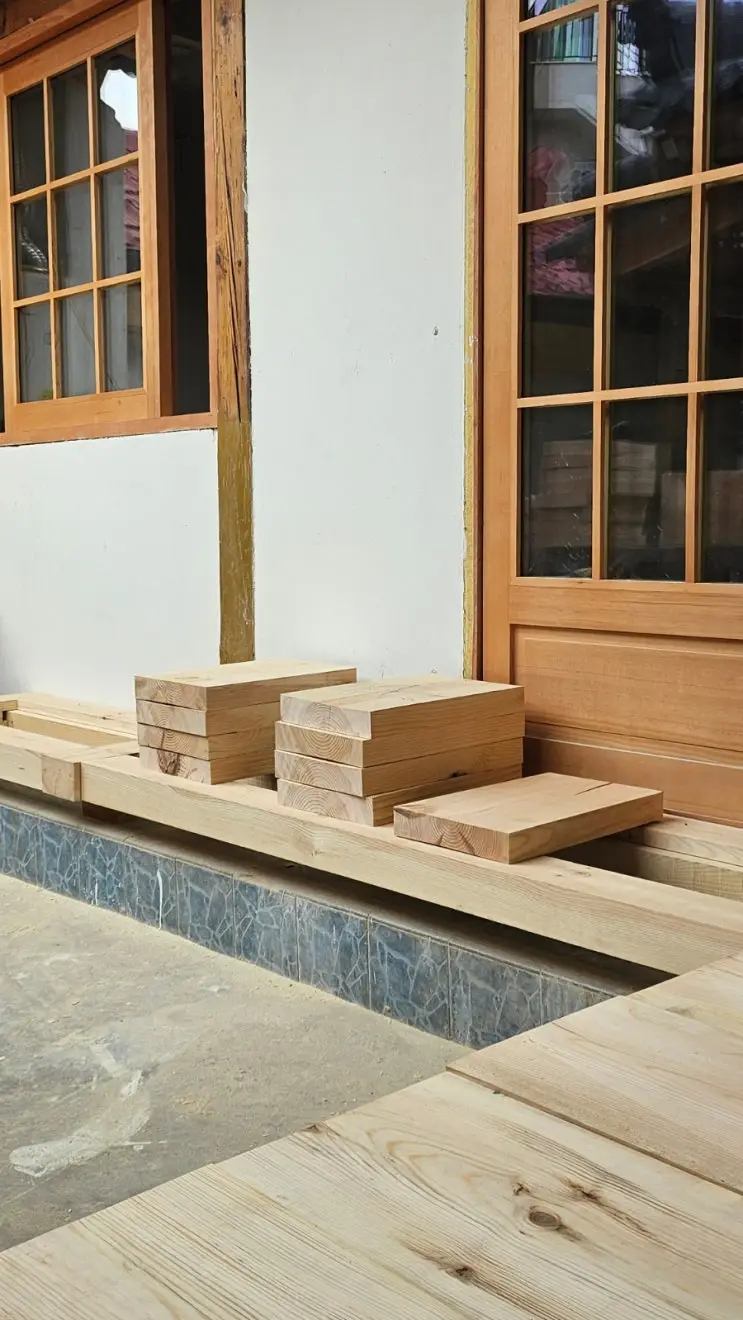
One night during the renovation, an odd thought arrived: the things that give humans the most are the things that ask nothing back. Sunlight, air, the warmth of a floor in winter. They’re unpriceable precisely because they’re unconditional. And a question followed it: could a house be like that for the people who stay in it?
That question is why Doiok exists in the form it does. We didn’t rebuild a 1956 hanok for 128 days to create four bedrooms in Seoul. Seoul has plenty of bedrooms. We rebuilt it because we believe something mildly heretical for the hospitality business: comfort is not the product. Aliveness is.
The case against frictionlessness
Modern travel accommodation is an arms race toward zero friction: keyless entry, blackout curtains, climate control you never think about, rooms engineered so that nothing, including the place itself, ever touches you. It works. It’s also why you can wake up in a hotel and need a moment to remember which country you’re in.
A hanok refuses this, structurally. You cross a courtyard under open sky to reach your room. You live at floor level, on ondol heat, closer to the ground than Western rooms allow. Rain isn’t weatherproofed out of your awareness. It lands on clay tiles a few meters overhead, and you hear the weather happen. The house has a body, and staying in it means being in a relationship with that body.
We’ve come to call this good friction: the small resistances that make an experience register. Drawing water, tending a fire, setting a low table properly. These things are slower than their modern replacements, and that slowness is exactly where the memory forms. The fast version leaves no trace. Nobody has ever told a story that begins, “So I tapped my keycard.”
What we kept, what we didn’t
We should be precise here, because “embrace discomfort” can be romantic cover for a cold, buggy building, and we spent the whole 128 days making sure Doiok is not that.
What we eliminated, ruthlessly, were the discomforts that are merely deferred maintenance. We insulated every ceiling bay and wall (the 1956 original had none). We installed four air conditioners against Seoul’s brutal summers, rebuilt the underfloor heating, built four modern bath and toilet rooms, sealed every draft with an embarrassing quantity of urethane foam, and ran fast Wi-Fi. We even slept here three nights with our own children before opening, hunting inconveniences. That test-stay is why there’s now a water purifier in the kitchen.
What we kept, deliberately: floor-level living on warm ondol. The courtyard crossing. The maru, the wooden platform where you’ll drink your morning coffee outdoors whether you planned to or not. The exposed 1956 rafters overhead, dressed but not hidden. A masonry bathtub set by a window, because a bath should have a view of something alive. Low tables and floor seating, which keep the rafter-lines visible and put everyone, kids included, on the same plane.
The distinction we used for every decision: does this friction produce experience, or just annoyance? Annoyance we engineered out. Experience we protected, even when it was the harder build.
A house that updates like software
The other conviction we brought from our previous lives: a place should never be finished.
The products we’ve admired kept shipping updates long after launch, and we think a stay can work the same way. We watch how guests actually use the house (our first soft-open guests taught us the connecting door leaked sound; a dampening panel went on within the week) and we treat the experience itself as a product with a roadmap: seasonal rituals we’re prototyping, from listening to the night rain with devices down, to setting a proper Korean soban table with market ingredients from Gyeongdong, ten minutes’ walk away.
The 128-day construction log has an end. The update log doesn’t.
The honest pitch
A room that could be anywhere, we cannot give you. What we can give you is a specific old house in a specific unglamorous, wonderful neighborhood, rebuilt by two brothers who know every beam by name, where the floor is warm, the rain is audible, and the mild inconveniences have been curated with the same care as the comforts.
You will occasionally have to put on shoes to get to breakfast. That isn’t a flaw in the experience, it’s the experience: the sky checks in on you daily. We think you’ll leave more rested than any blackout curtain ever made you.
The thinking here started in a dawn journal entry mid-renovation and has been field-tested by real guests since. For how the house itself was brought back, start with What Is a Hanok, Really? or the 128-Day Log.
Questions we actually get
Is Doiok uncomfortable, then?
No. We insulated the whole house, installed four air conditioners, heated floors, four bath/toilet rooms, and fast Wi-Fi. The 'discomfort' we mean is texture, not hardship: floor-level living, a courtyard you must cross, rain you can actually hear. The inconveniences that remain are the ones we chose to keep because they are the experience.
What do you mean by 'experience over space'?
We think a stay succeeds when guests leave with a memory they couldn't have manufactured at home: the sound of rain on tiles from the maru, a slow bath by a window, breakfast at floor level. The house is the instrument, not the product.
Who is Doiok for?
People, very often families, who want to feel how Koreans actually lived, in a neighborhood where Koreans actually live, rather than to check into a hotel that could be anywhere. If you want frictionless, we'll cheerfully point you to excellent hotels. If you want alive, come.