A Ceiling Collapse, a Deadline, and a Clean Roof
원문: 한옥 셀프 리모델링 기록 #22 (지붕 폐기물 정리 · 지붕 보토작업 · 처마 천장 미장) (한국어판)
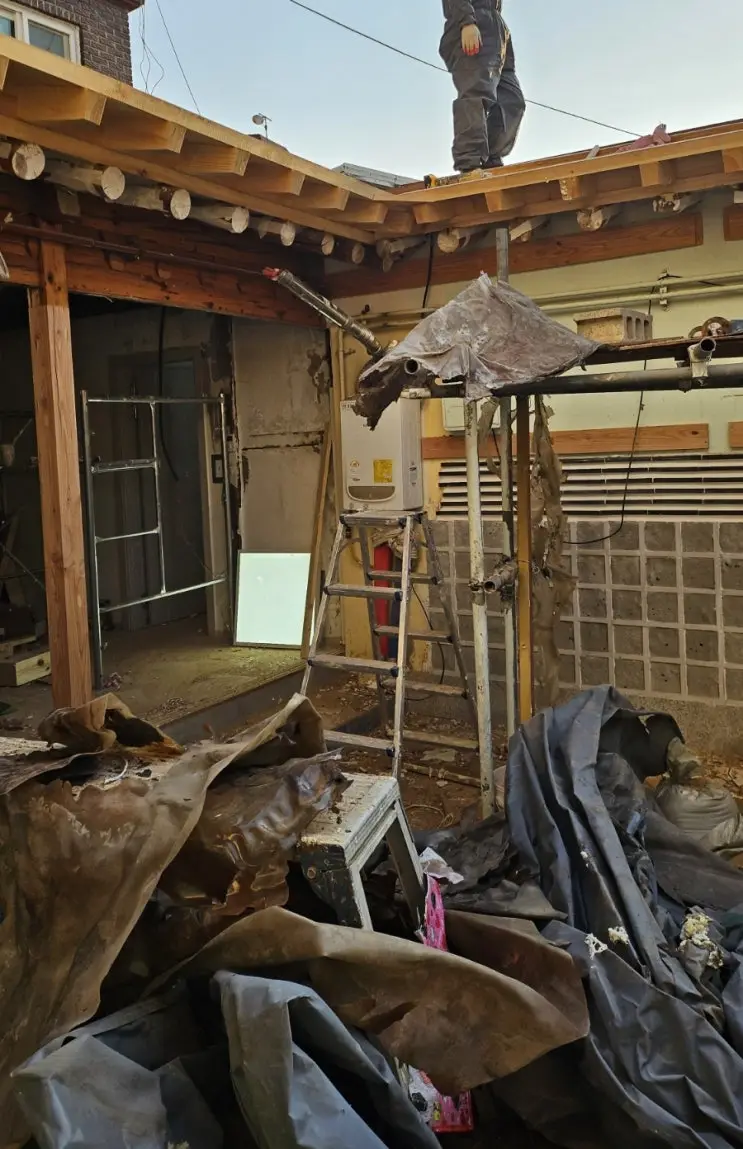
Day twenty-five. (Day 23 vanished into a full day of trowel work on those hostile corridor bays; day 24 we rested.) Tomorrow, at last, the tiles arrive — today was about being ready.
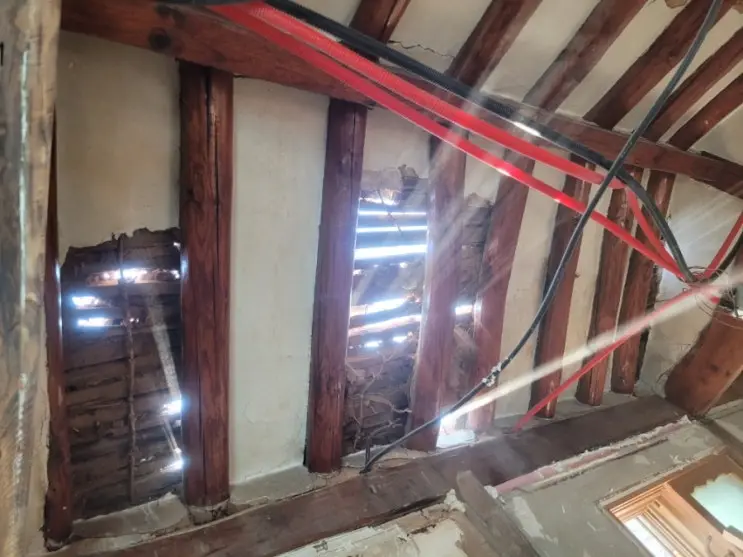
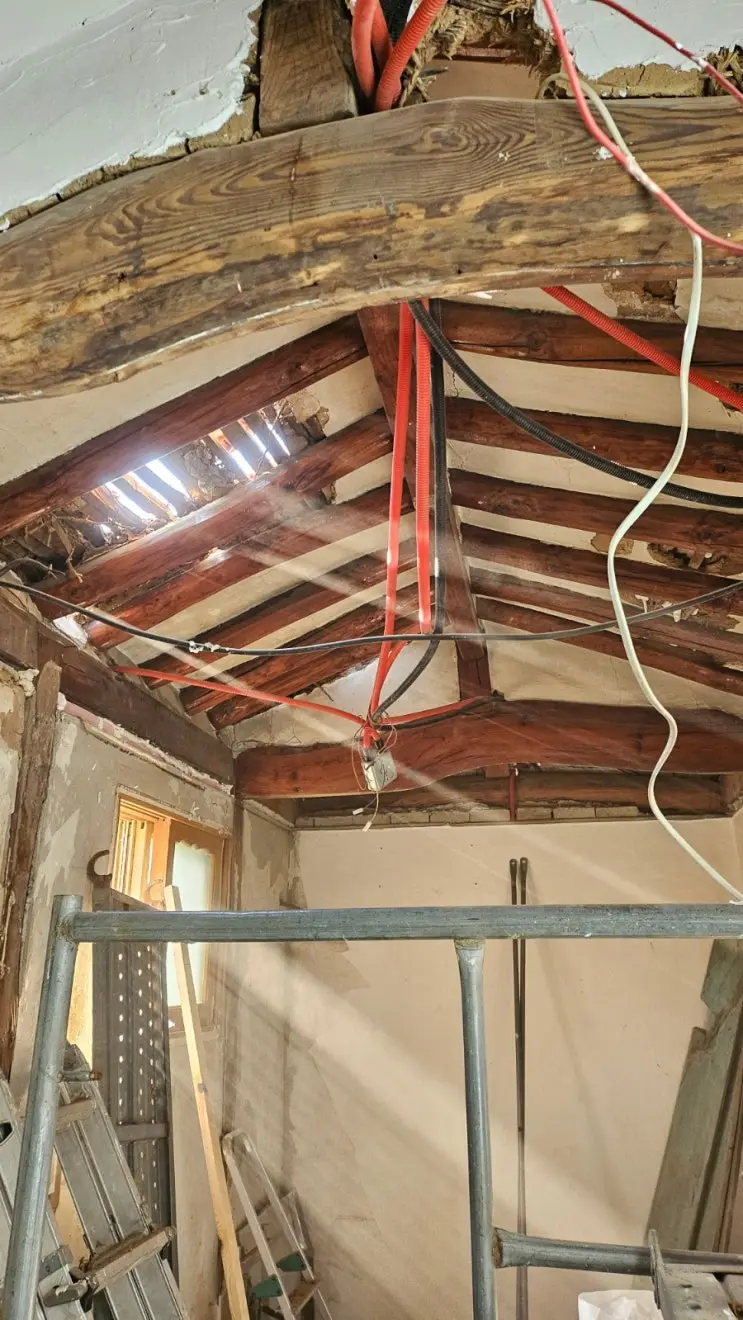
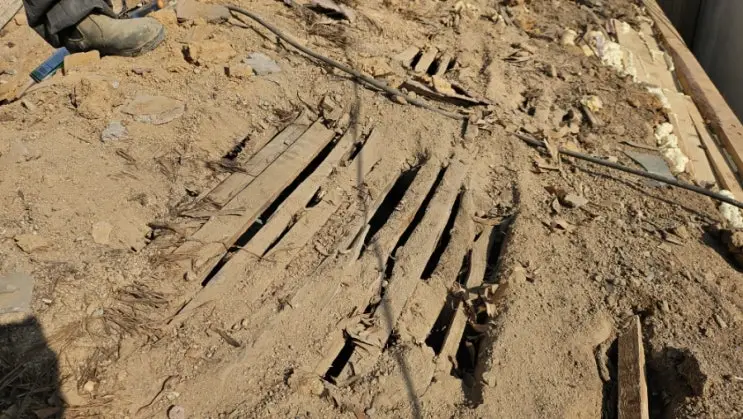
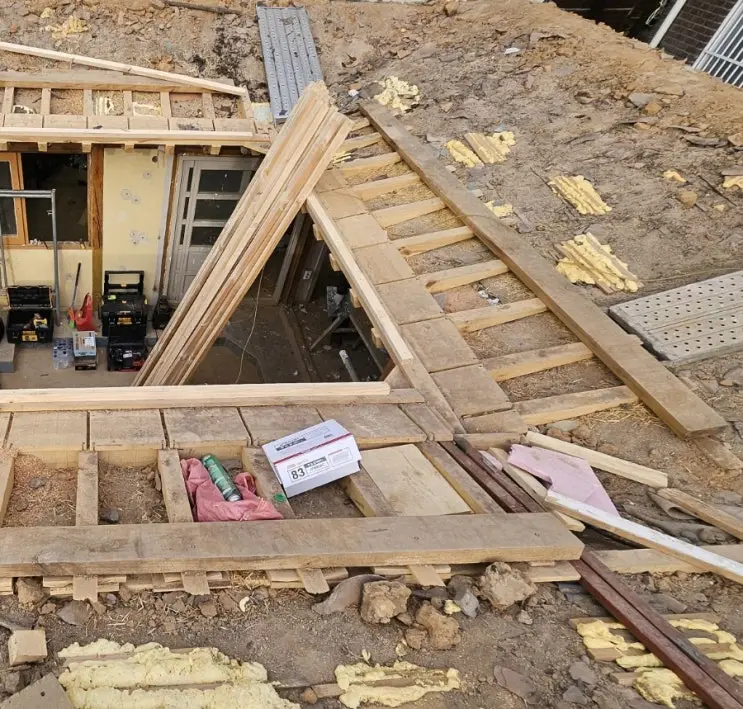
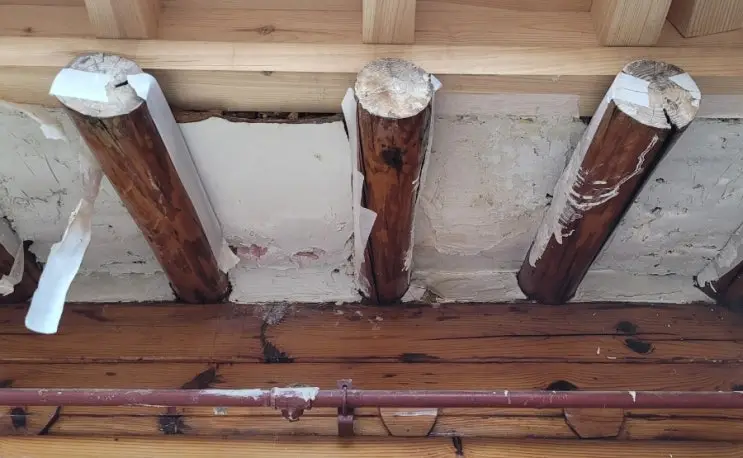
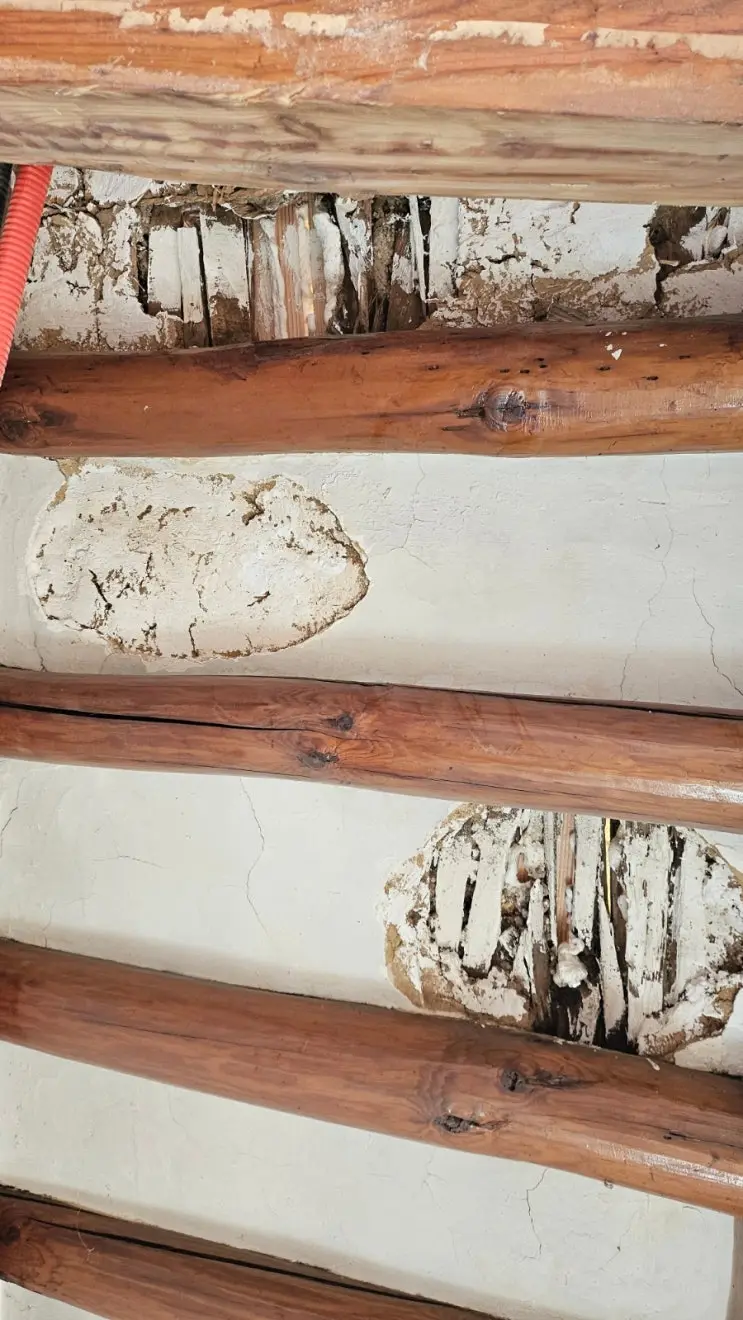
The collapse. The urgency was underlined by an incident: a section of the annex ceiling came down. Inspection showed rain exposure and age had left parts of the old finish so brittle they fell at a tap. Rather than patch the unstable areas, we stripped them deliberately and repacked the voids — battens laid crosswise, urethane foam locking everything tight. The annex ceiling will now get the full foam-board insulation treatment like the rest of the house. A collapse forced a decision we should have made anyway.
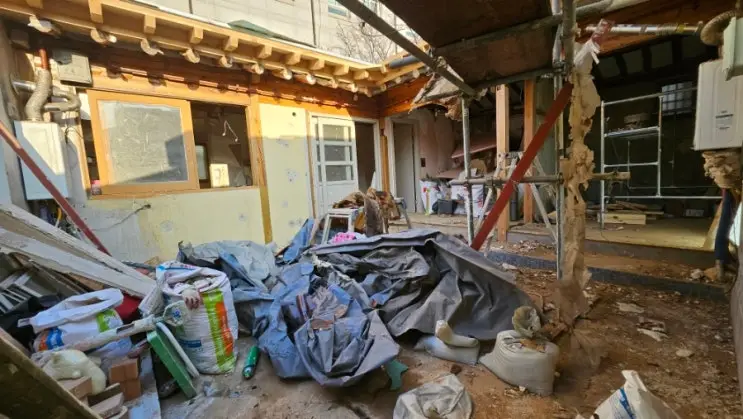
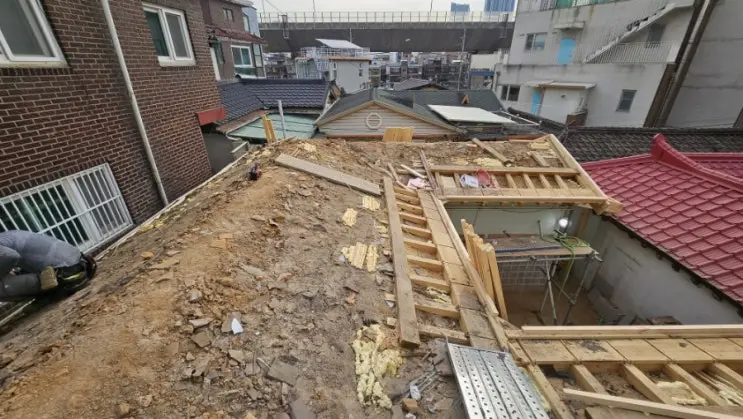
Clearing the roof. The tiling company’s request was simple: a completely clean roof. So everything came off — the rain tarps, the plastic sheeting, the pipes that had weighted them down, every scrap of debris from weeks of repairs. Last-chance thinking applied to the remaining holes too: once tiles cover the roof, these voids become unreachable. We packed them one final time, thoroughly.
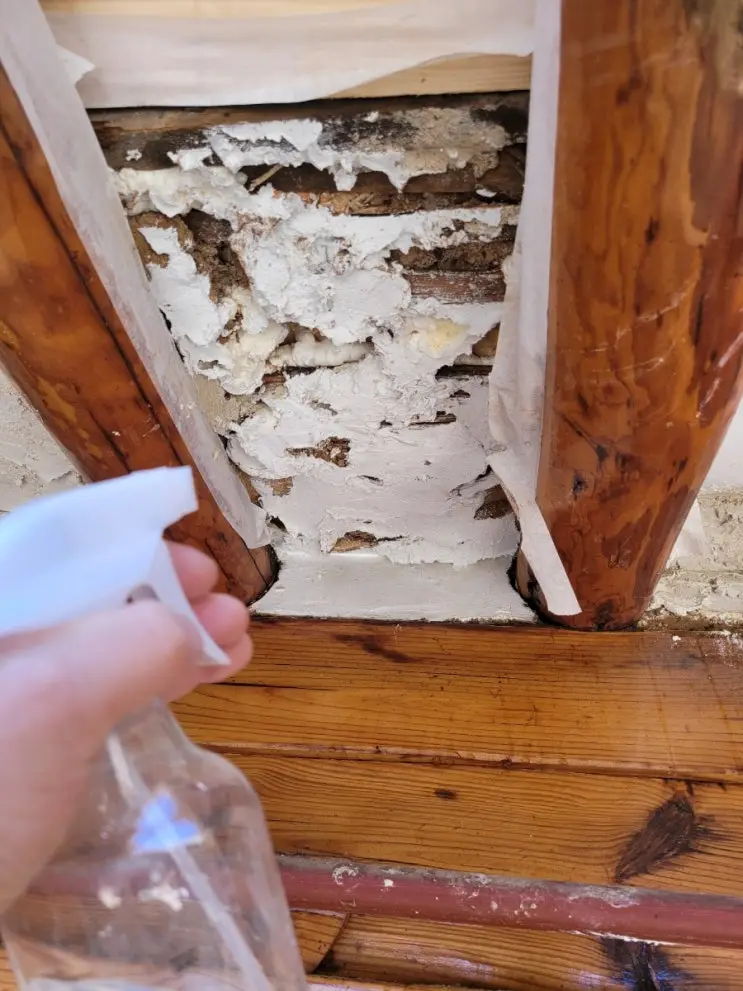
Making cement stick to history. The day’s plastering — around the eaves and the patched ceiling zones — ran into a familiar enemy: fresh cement sliding off the ancient dry clay instead of bonding. The field method that emerged:
- Mist the clay with a spray bottle — a damp surface grabs; a dry one repels
- Pre-fill the big voids with urethane foam or foam-board scraps
- Then plaster — one bag of X18 went on far more cooperatively
For ambiguous surfaces, a thin cement-and-water slurry brushed on first acts as a bonding primer. All of today’s plaster was rough first-coat by intention — building the base that finish coats can trust.
Tomorrow the roof starts becoming a roof again.
Originally logged in Korean on March 13, 2026 — read the original. Translated and edited by the brothers who did the work.