A Slide for Roof Tiles, Invented on the Spot
원문: 한옥 리모델링 기록 #5 (기와 일부 철거, 아시바 안정화, 서까래 정리, 목공 폐기물 반출) (한국어판)
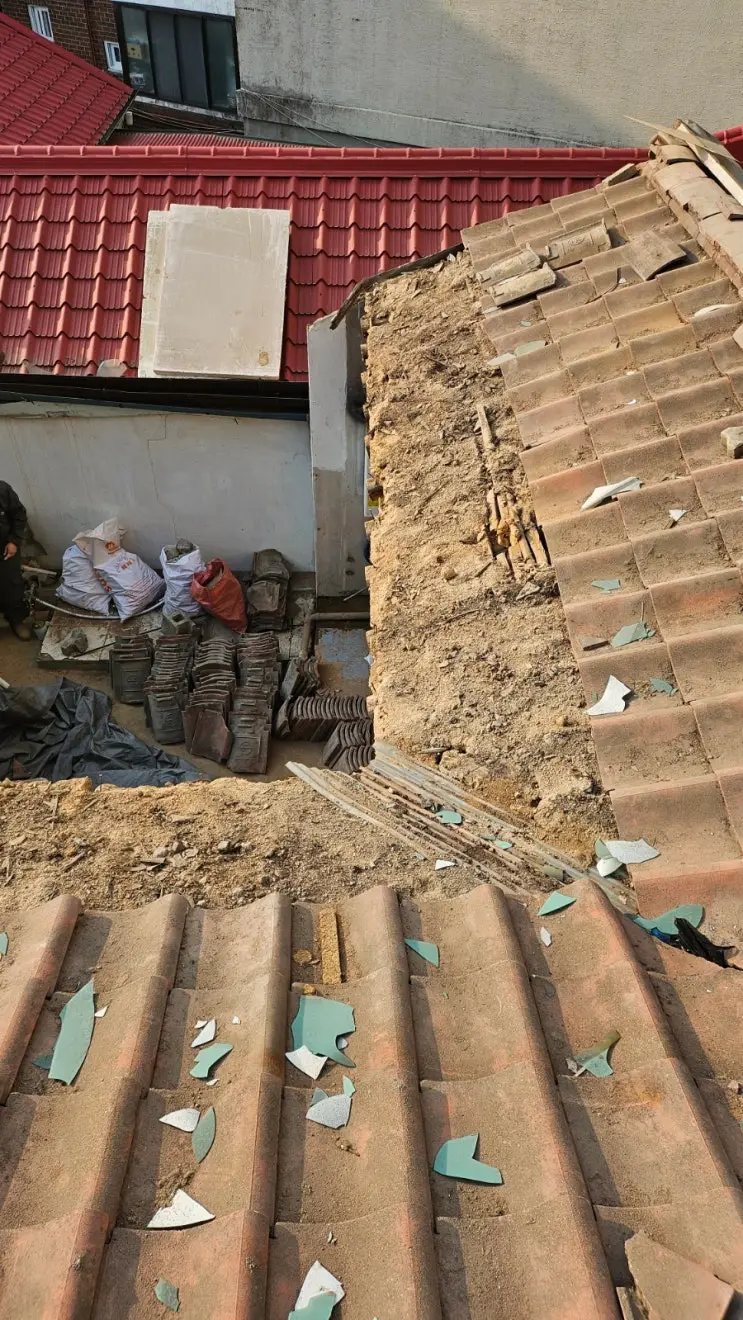
Day six. Before the roof work proper, a day of securing the workspace and clearing the backlog of waste.
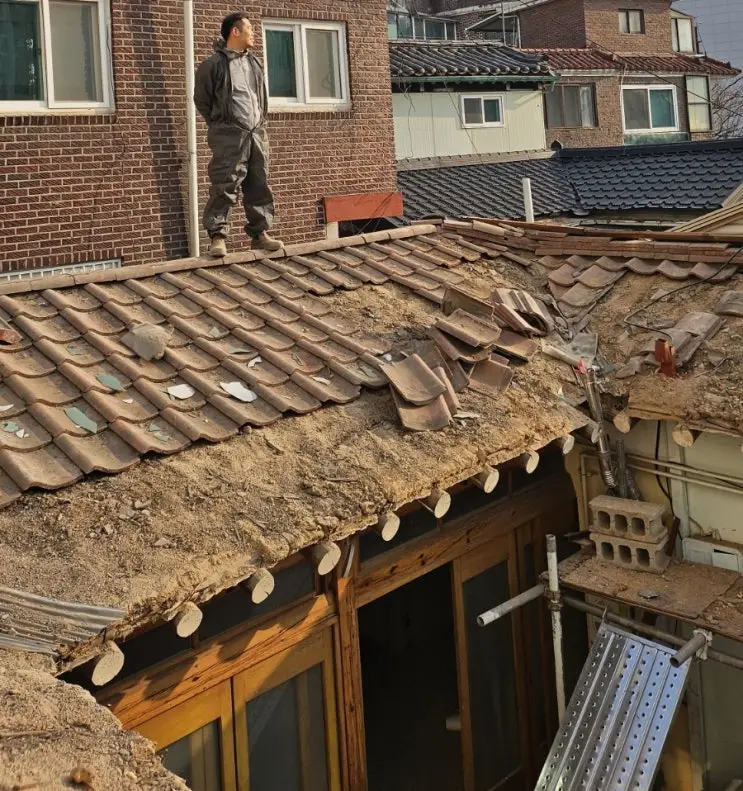
200 tiles down. Our carpenter asked us to pre-clear the tiles at the eaves’ edge before the buyeon (eave-extension rafters) could be installed. We meant to remove only the edge row — but momentum took over. It was our first close look at how traditional tiles interlock: pull one from the bottom row and the tiles above it release almost willingly, column by column. We ended up bringing down about a fifth of the roof — roughly 200 tiles — reducing the roof load and opening up working room in one move.
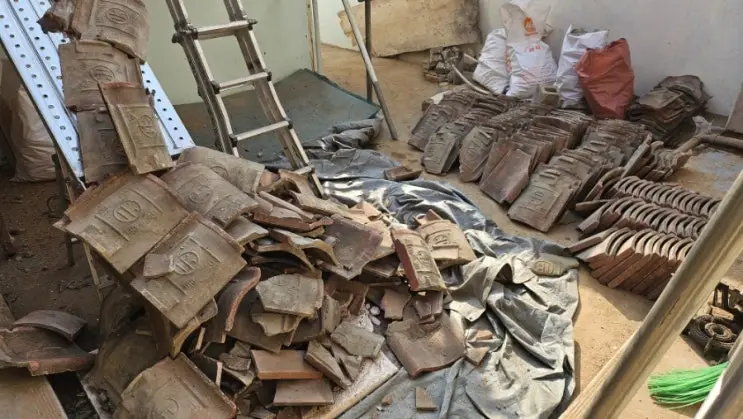
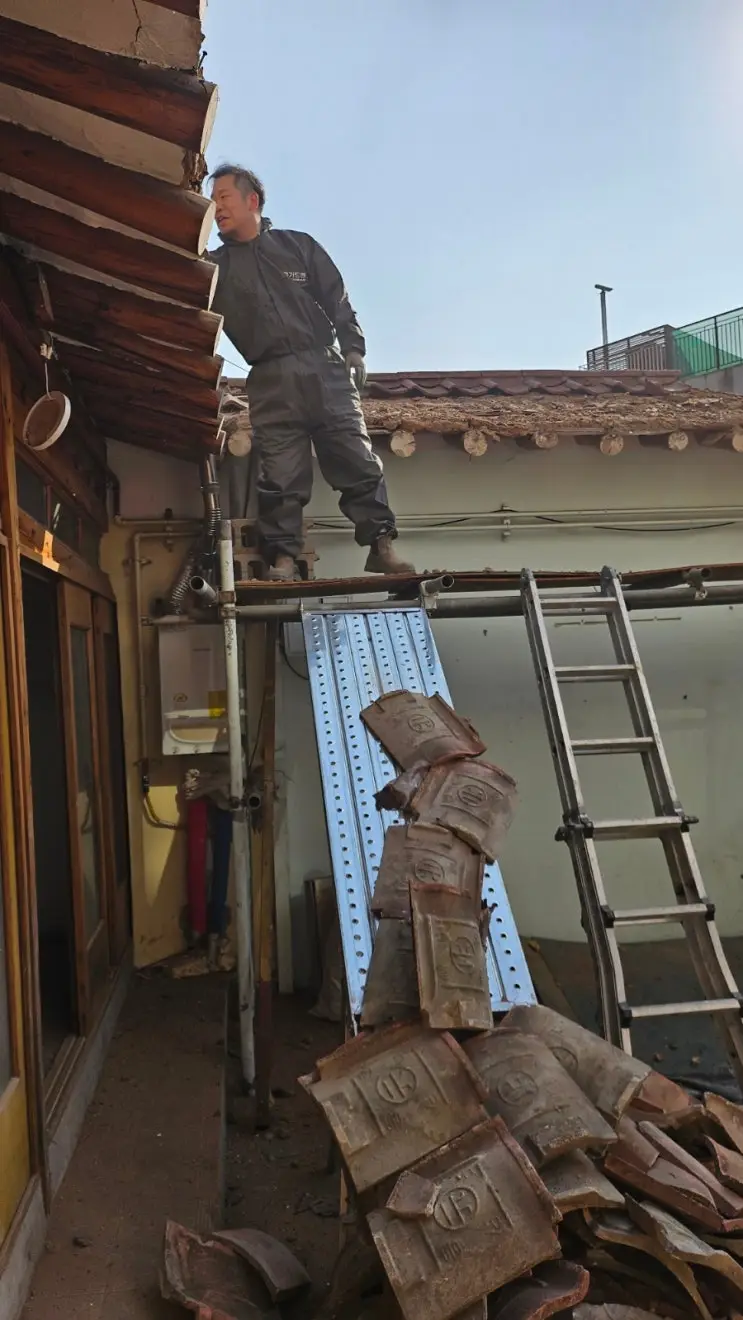
The tile slide. Getting heavy tiles from roof to courtyard is the dangerous, exhausting part. Throwing them is loud, risky, and brutal on the body. My brother’s solution, improvised from the pipe scaffolding: a slide. Tiles ride down under control onto styrofoam padding over a tarp — quieter, safer, and the debris stays in one place for cleanup. The scaffold went from access equipment to material-handling system.
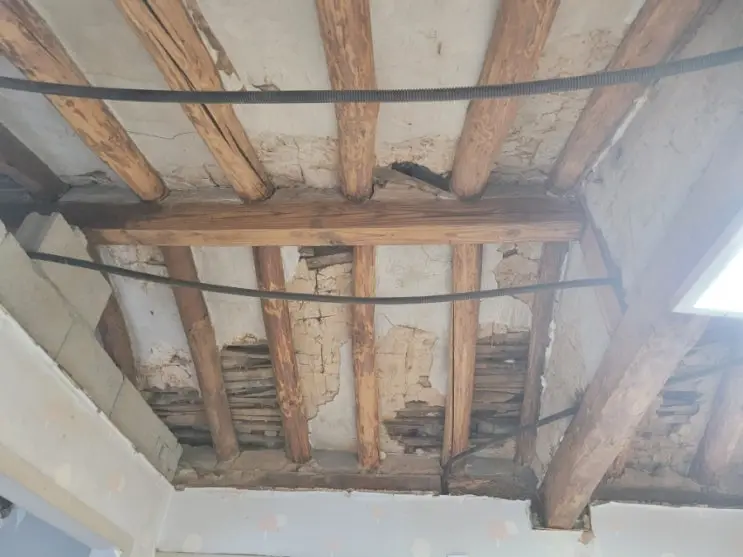
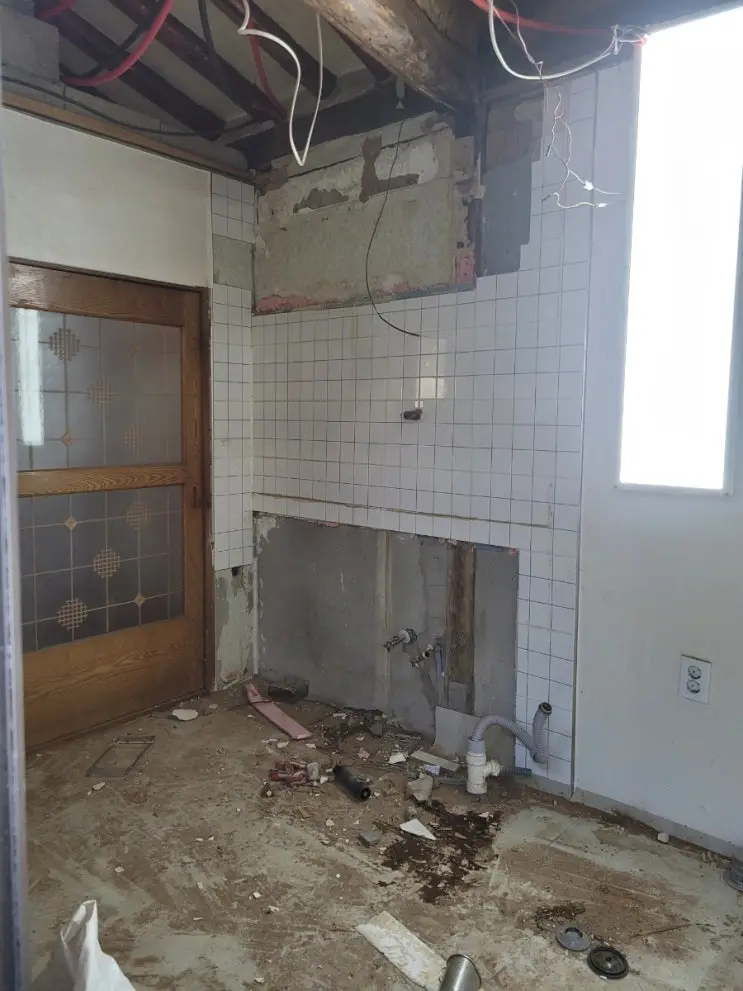
Rafters, kitchen, waste run. Between roof sessions we kept grinding rafters — a day’s labor dresses just under one room’s worth. We also tore out the old sink unit in the annex (its plywood-and-laminate construction had no place in what we’re building) so it could leave with today’s timber-waste truck: ₩50,000 for the truck, ₩50,000 for disposal at the waste yard. Same-category waste is worth hoarding until you can fill a full load — the transport fee hurts more than the disposal fee.
Water on site. After the trucks left, we hooked up a temporary tap in the courtyard and hosed the site down. Dust control transformed. A construction site without running water is a mistake; ours now has it, and a proper hose is on order.
| What we paid for | Cost |
|---|---|
| Truck transport for timber waste | ₩50,000 |
| Timber waste disposal fee | ₩50,000 |
Originally logged in Korean on February 20, 2026 — read the original. Translated and edited by the brothers who did the work.