Trowel, Mist, Brush: Cracking the Mud-Wall Finish
원문: 한옥 셀프 리모델링 기록 #39 (욕실 방수석고 마감 · 화장실 타일부착 준비 · 천장 흙벽 마감 · 워시타워 배관 설치) (한국어판)
Day forty-three. A day of surfaces meeting their fates — and one process worth writing down permanently.
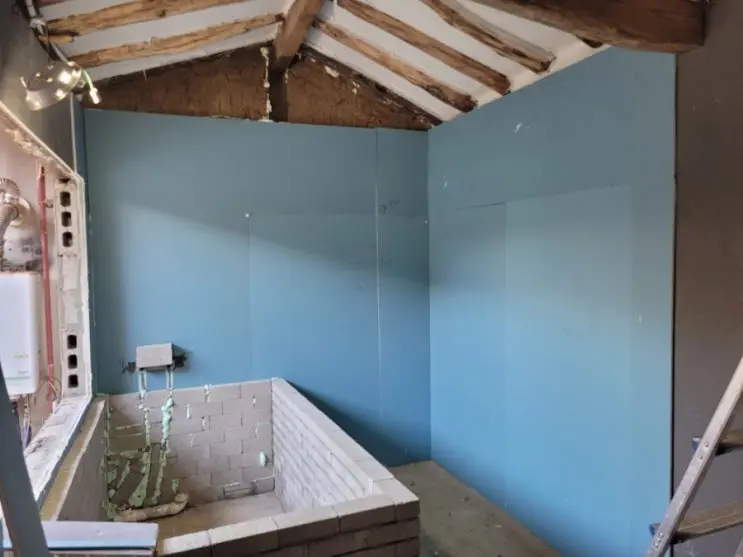
The tub’s final skin (before the skin). Over the bath walls’ insulation boards went waterproof plasterboard — the actual surface the tile will grip. Priority here wasn’t cosmetic flatness but bond: tile is heavy, and a hollow behind the board is a future crack. So before each sheet went up, we pressed the boards beneath and injected urethane bond through any spot that gave — the syringe trick again, now standard practice.
Three bathrooms made tile-ready. Each room had its own prerequisite: the master-bath doorway’s stray old tiles chipped off and faired; the main bathroom’s exposed mud-wall patches (a souvenir of wall demolition) rebuilt with mortar; and in the annex bathroom, an entire window closed for good — foam board, GCS board, and two layers of waterproof plasterboard building the opening flush into the wall plane. A bathroom wants privacy and tile more than it wants that particular window.
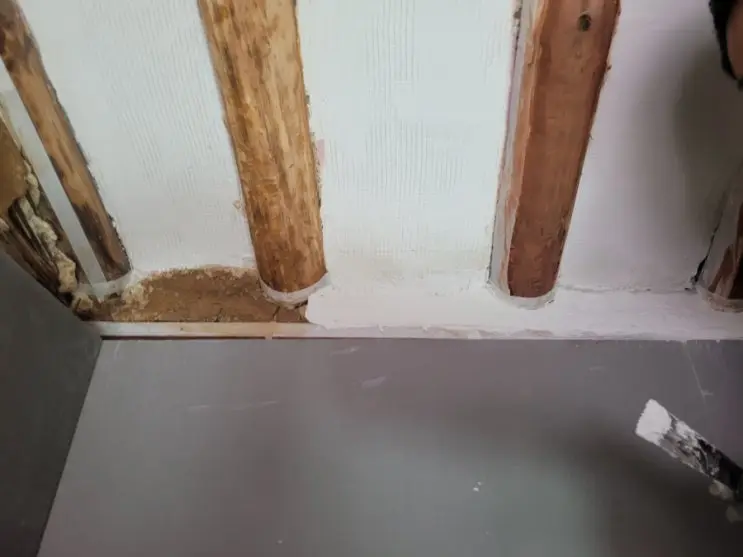
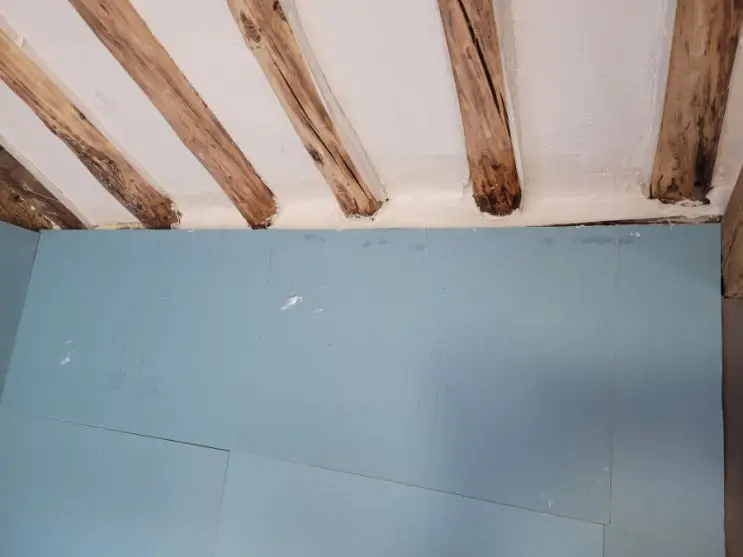
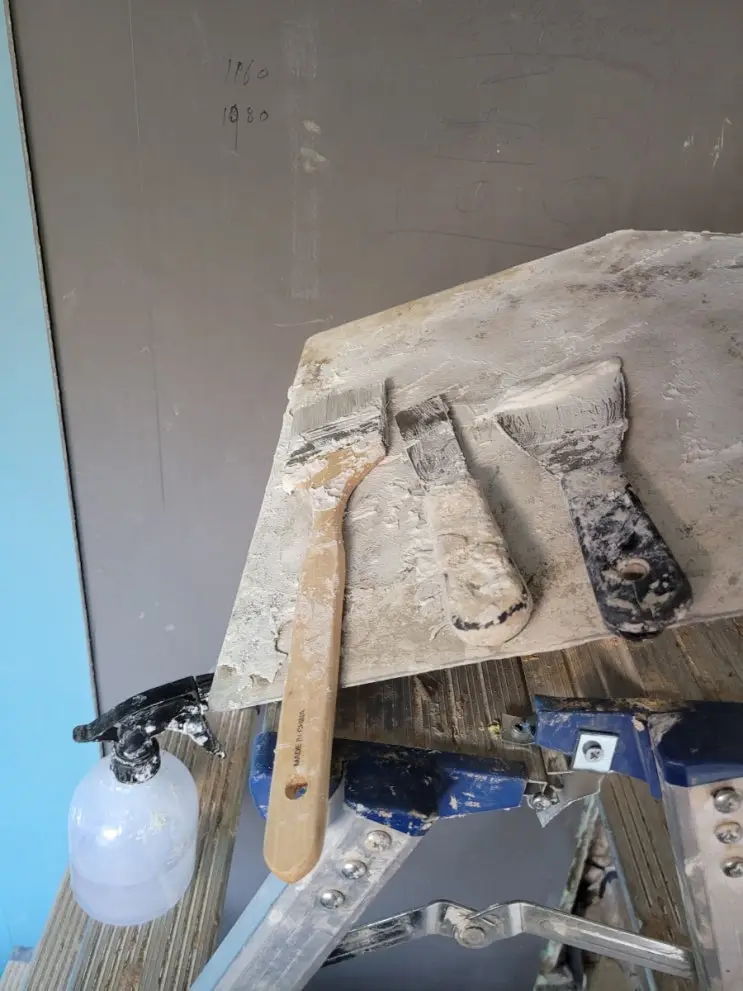
The recipe. The stubborn zone where ceiling meets wall — raw earthen wall, crumbly and irregular — finally surrendered to a repeatable method: Moldine primer first (the old mud stops shedding), X18 cement mixed deliberately thin and spread with a spatula, then the discovery — mist the fresh surface with a spray bottle and sweep it with a soft brush. The brush erases every trowel mark and the surface dries looking like sanded white lime plaster. Four tools: spatula, sprayer, brush, patience.
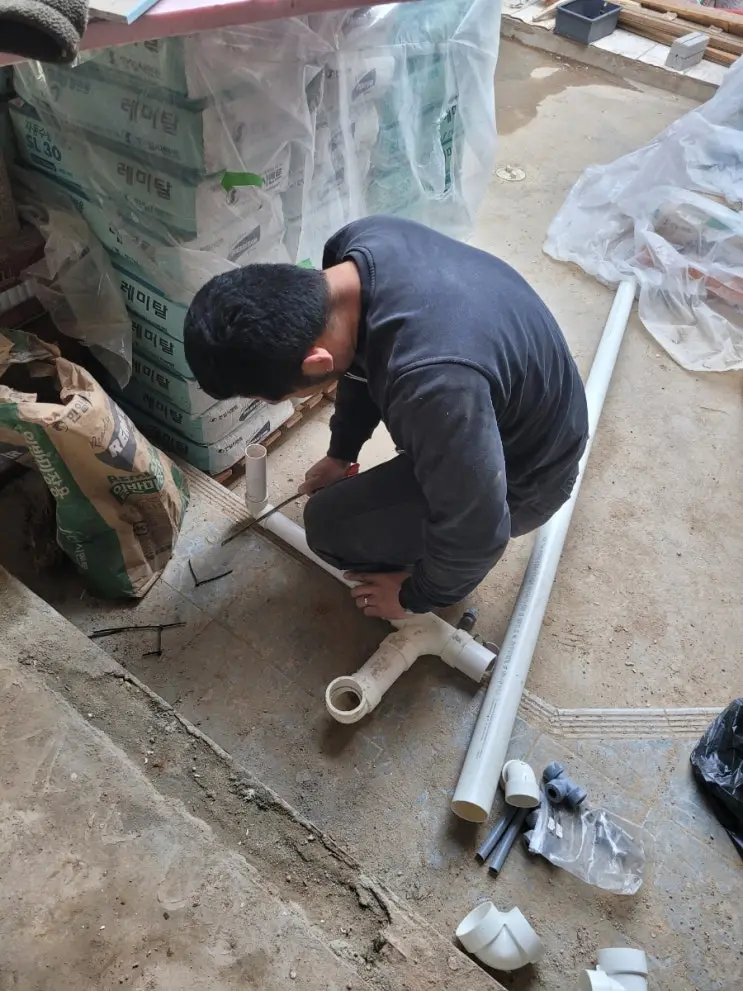
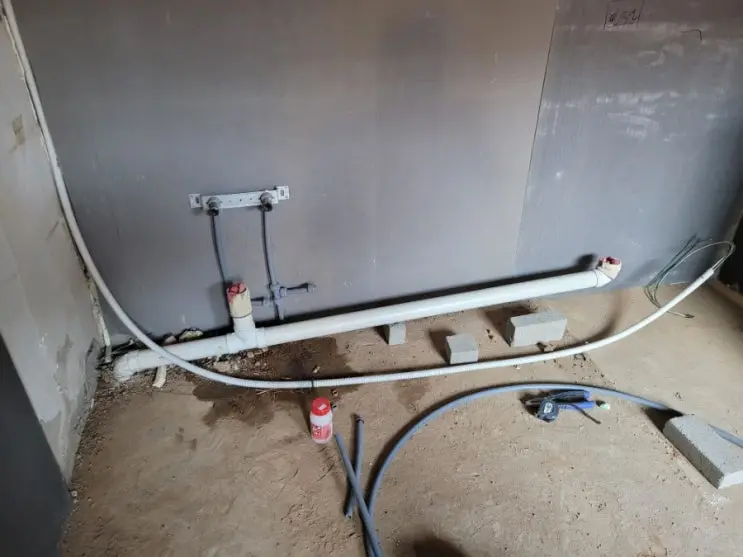
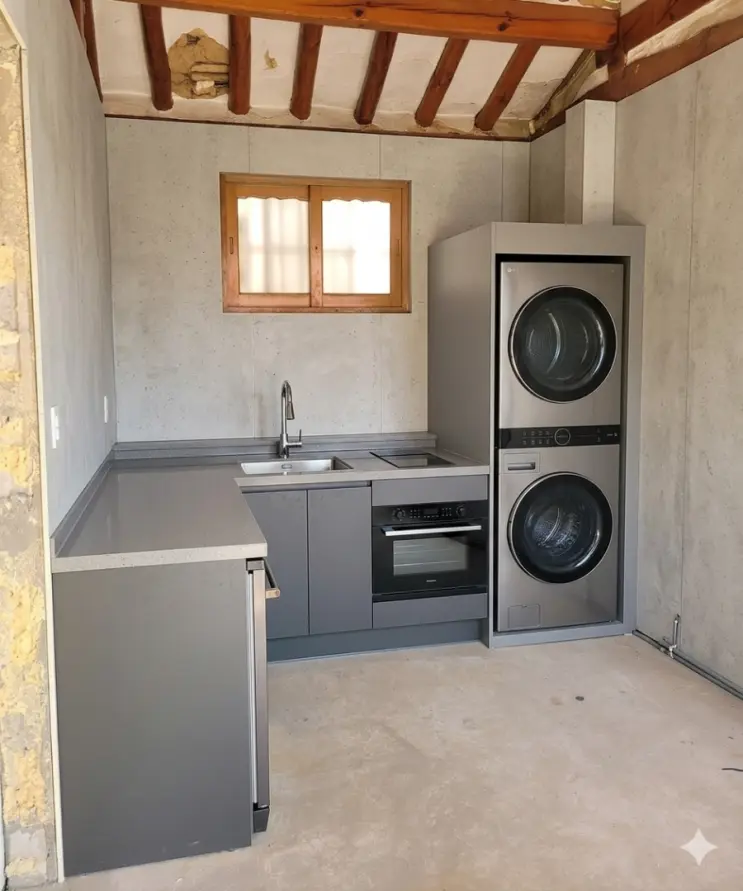
The forgotten appliance. Late in planning we caught an omission: nowhere for the washer-dryer tower. Solution — a slot in the new kitchen zone, drain and supply lines extended from the adjacent bathroom’s fresh plumbing, and the kitchen layout redrawn around it (AI mockup again settling the debate). Catching it before the leveling pour is the difference between a note in the log and a demolition story.
Originally logged in Korean on April 8, 2026 — read the original. Translated and edited by the brothers who did the work.