The Roof Is Bare — and We Rearranged the Whole Floor Plan
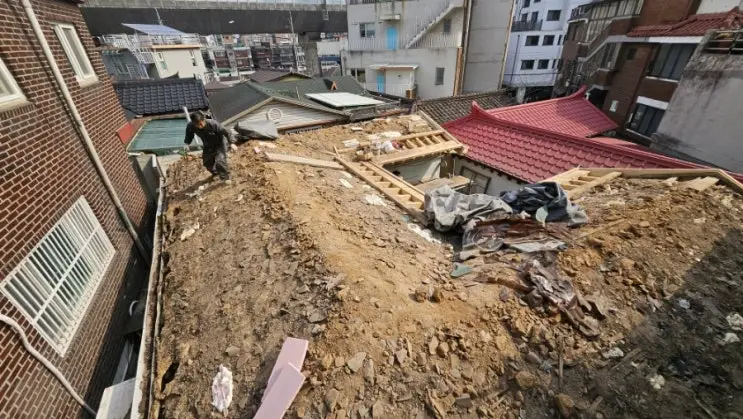
Day twenty-one. The roof gave up its last tile, and the interior gave up its old logic.
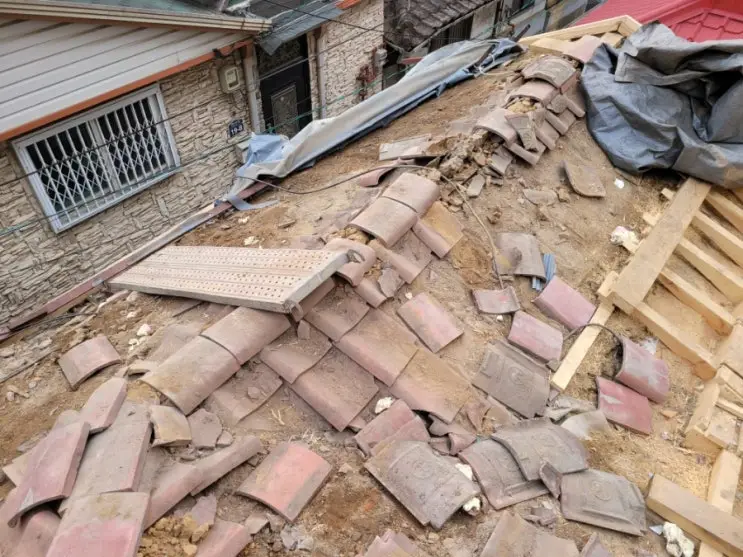
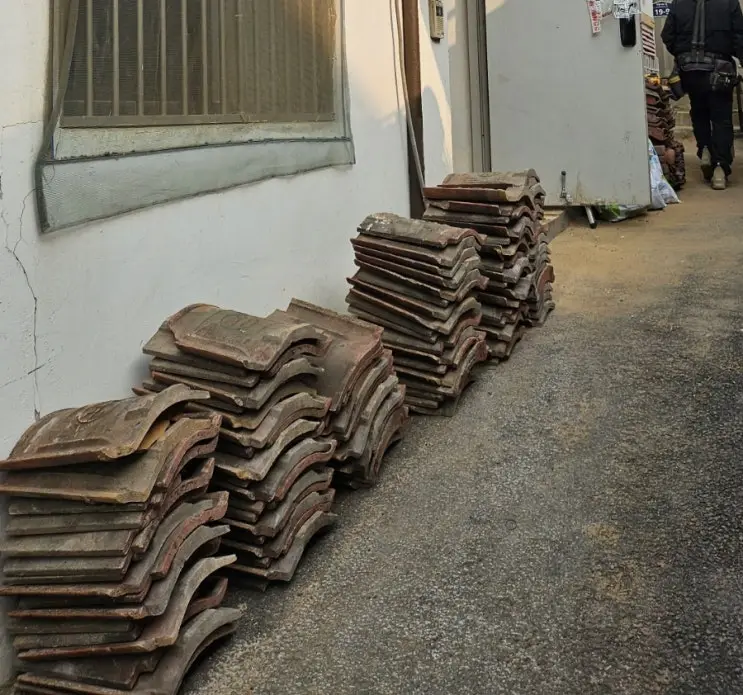
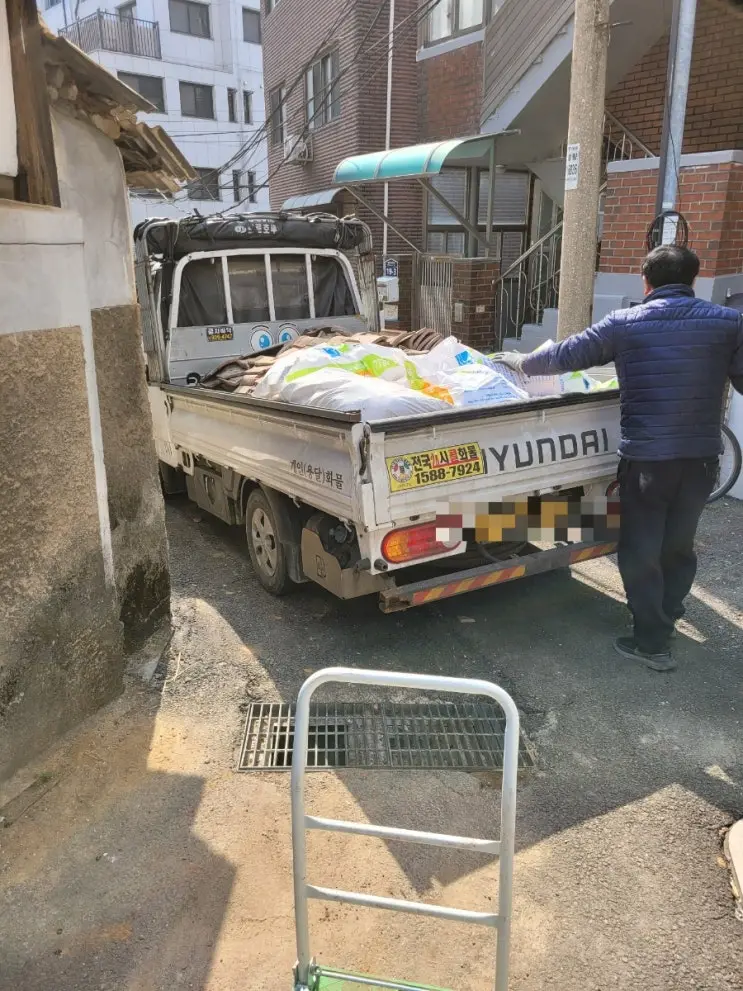
Stripping complete. With the Karrot helper making us three, the remaining tiles came down in half a day of continuous work. Final tally for the waste: two full one-ton truckloads, ₩220,000 all-in (two transport runs at ₩50,000, two stone-waste disposal fees at ₩60,000). Stone-class waste looks deceptively compact in a truck bed — the weight limit arrives long before the volume does.
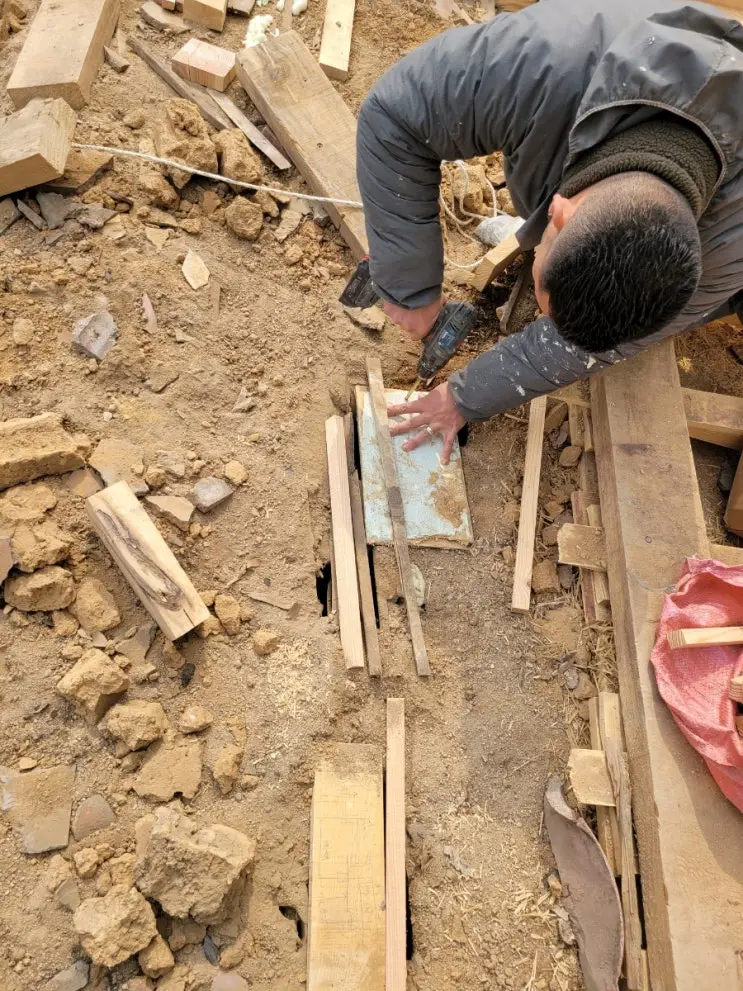
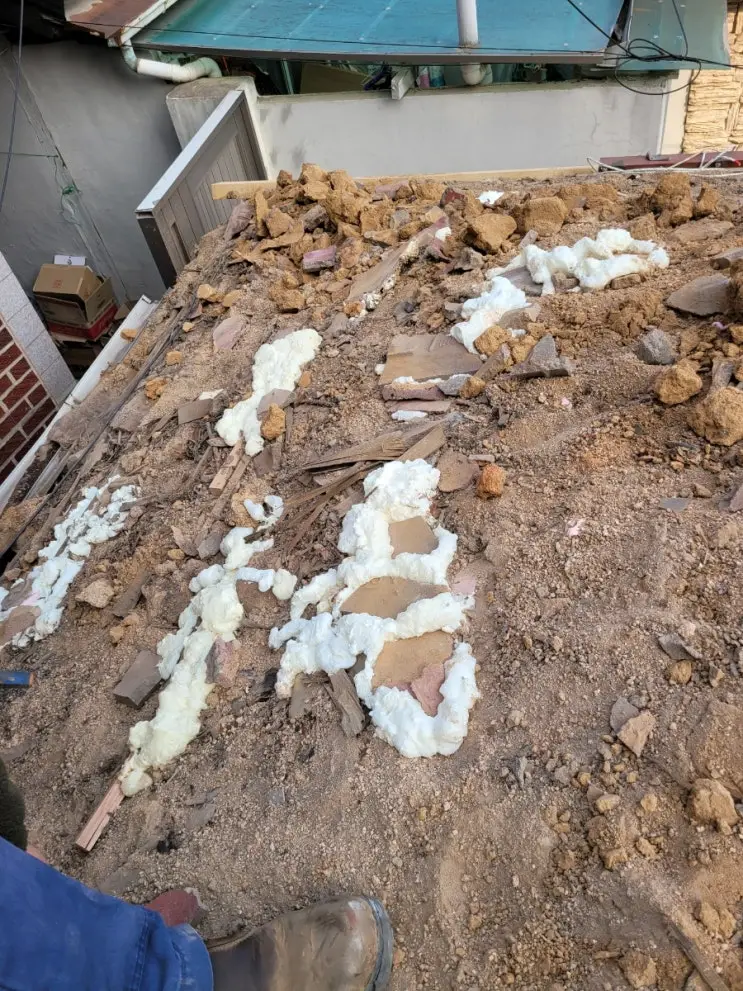
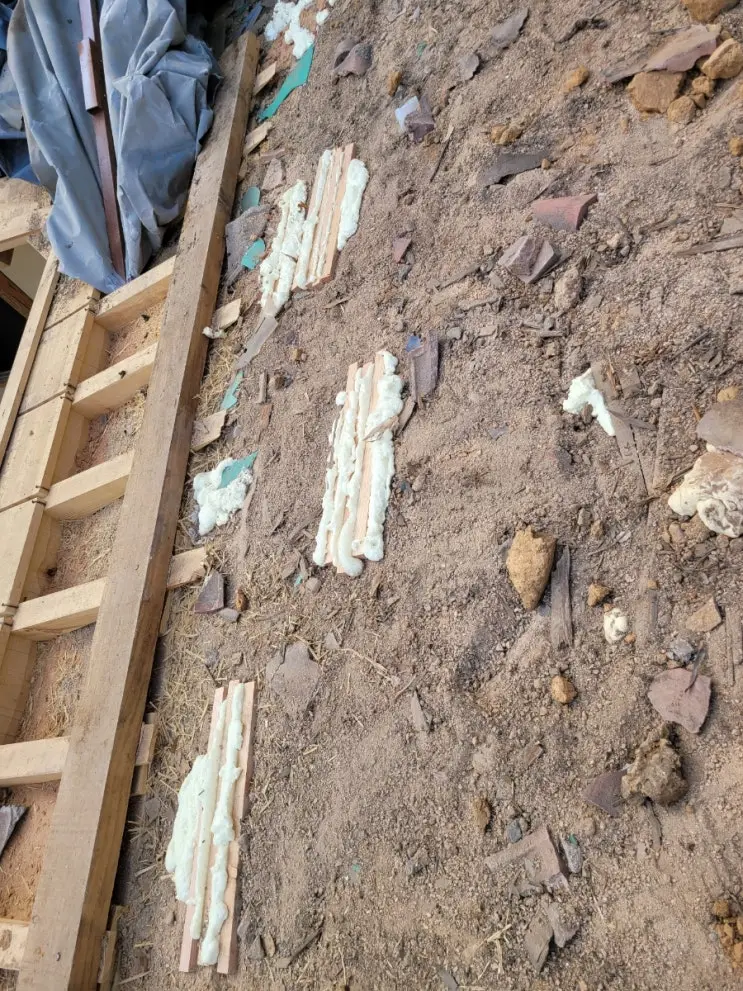
Patching a bare roof, our way. With every tile off, the roof revealed all its remaining holes at once — and this was the last possible moment to fix them from above. The traditional repair is brushwood and clay. We used what the site had:
- Big holes — 45 cm battens laid crosswise, playing the role of the traditional brushwood layer
- Narrow gaps — foam board sliced thin and slotted in horizontally
- Everything else — urethane foam, expanded and cured
- Surface — broken tile fragments pressed into the swelling foam to keep it flat
Checked after curing: solid. Improvised, economical, effective.
The floor plan flipped. Between roof sessions came the project’s biggest interior decision — re-zoning the entire plan around how guests will actually live here:
- Kitchen moves to the eok-kan (the former bedroom bay)
- Bath moves to the old kitchen’s position
- Dining claims the corridor space in front of the bathroom — a sofa-table arrangement
The old layout preserved the house’s history of use; the new one serves its future. A designer will refine the details, but with zoning locked, the interior feels half-decided already.
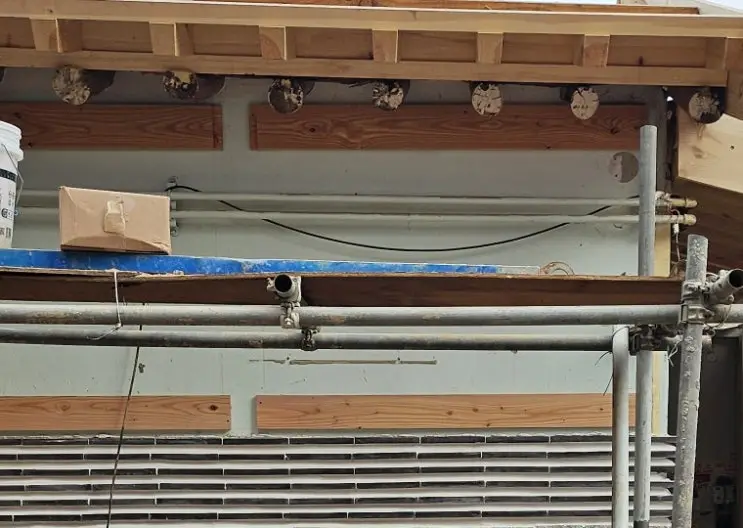
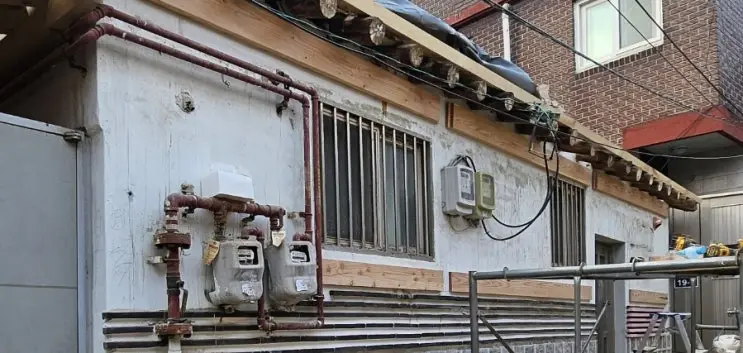
Timber went up on the facade too — boards tracing the dori and mid-rail lines, so the finished walls will show the hanok’s structural grammar rather than hide it.
| What we paid for | Cost |
|---|---|
| Tile waste transport (2 truck runs) | ₩100,000 |
| Tile waste disposal (2 loads) | ₩120,000 |
Originally logged in Korean on March 9, 2026 — read the original. Translated and edited by the brothers who did the work.