Finding the Finish: Putty, Mesh, and an Acrylic Filler Audition
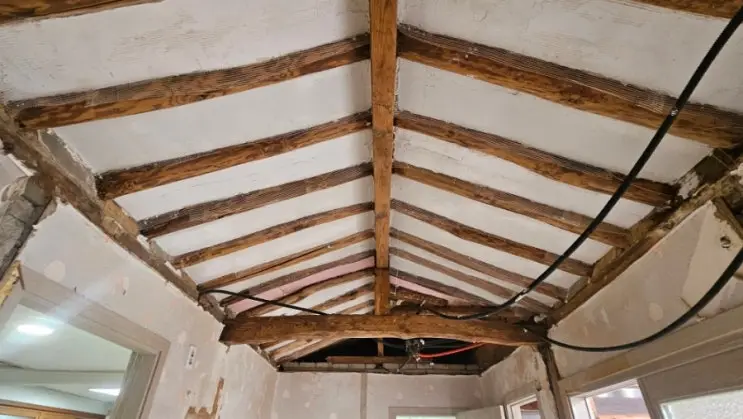
Day sixteen. A day of surfaces: base coats inside, mortar joints outside, and the audition of the material that would define our ceilings.
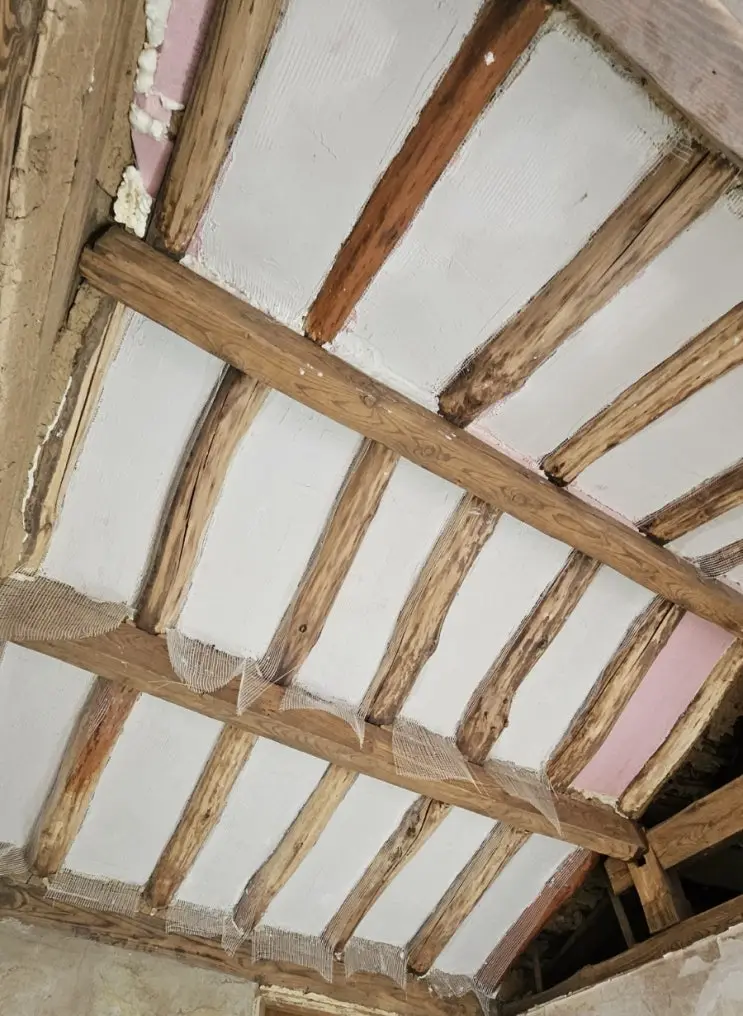
First putty coat, 70% done. My brother and I spent the entire day on the ceiling: X18 cement mixed deliberately wet, spread thin over the foam board, mesh laid in, then the surface drawn smooth. Corridor, living area, and bedroom bays — roughly 70% of the whole ceiling — with just 1.5 bags of cement. Thin and wet is the trick; thick coats sag between rafters and crack as they cure.
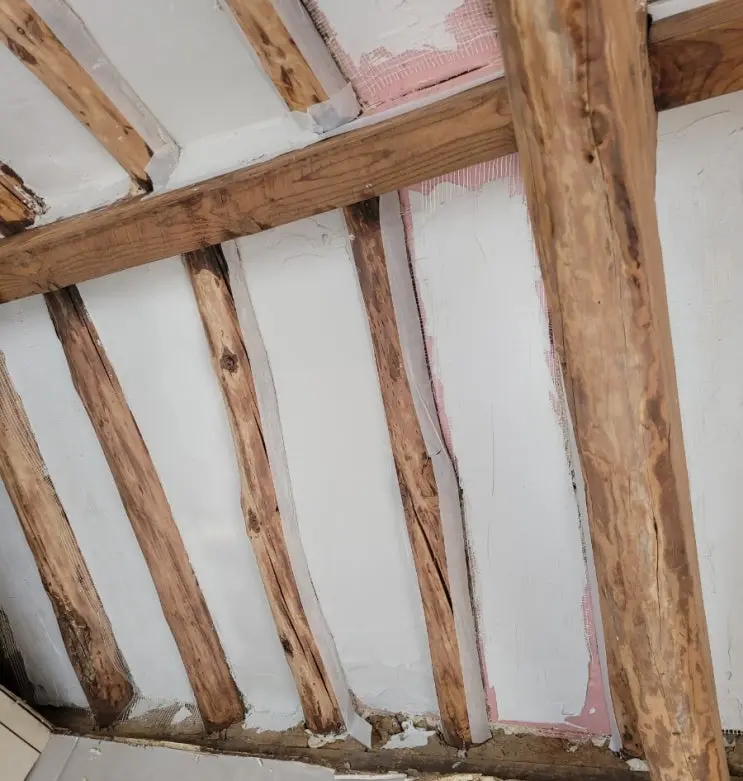
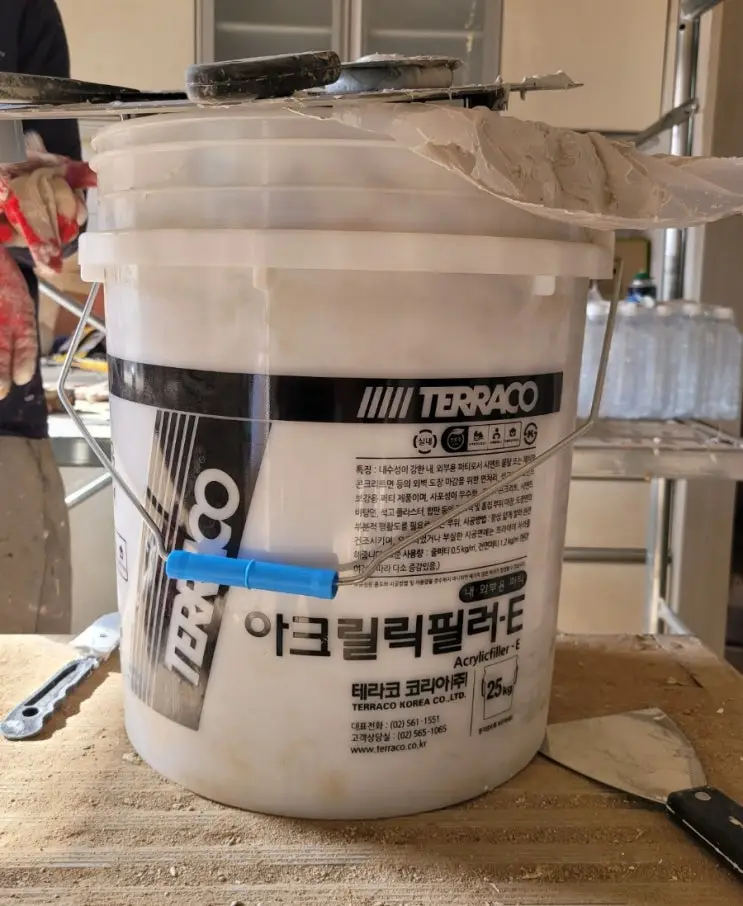
The audition: Acrylic Filler-E. For the final visible finish we tested a water-based acrylic putty that came recommended for two properties we care about: it resists hairline cracking (a real threat on a building that moves with the seasons) and it dries to a genuinely smooth face. We chose the three cleanest first-coated bays, cut back the protruding mesh edges, and applied it.
One discipline we’re glad we kept: masking tape along every rafter before the filler went on. This is the final coat — splatter on the sanded timber at this stage would mean re-grinding wood we’d already finished. The early results look promising: the surface is curing clean and flat.
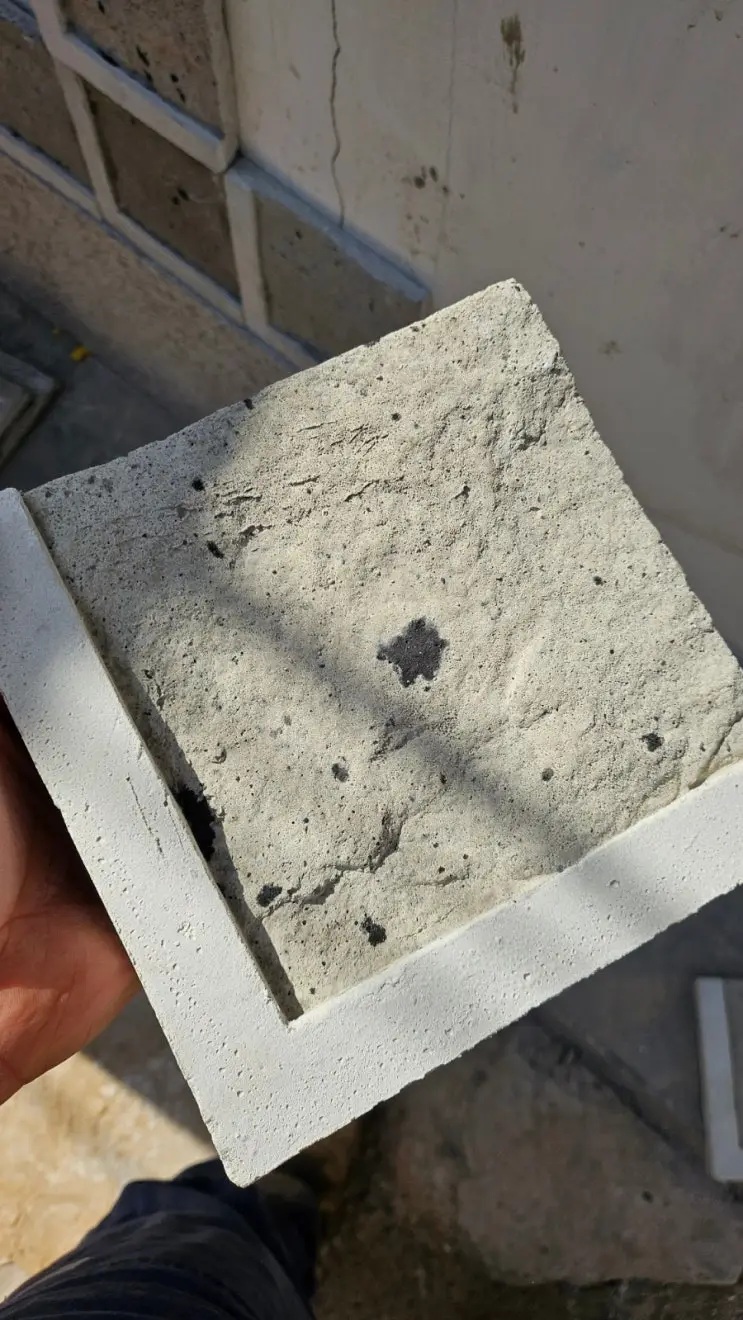
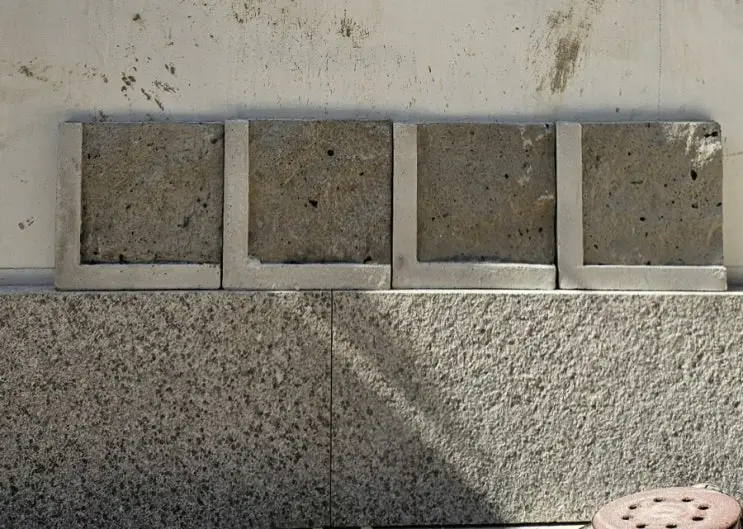
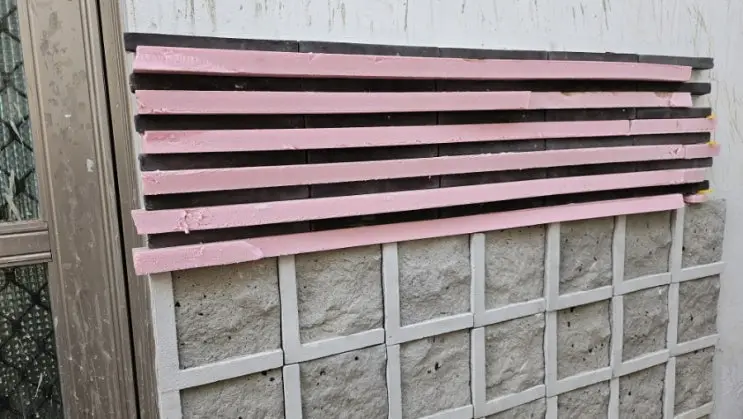
Foam board’s second career. Outside, the joint-pointing continued on the facade band: 1.5 bags of gray pointing mortar for the sagoseok, two-thirds of a bag of white cement for the wapyeon tile fragments. The improvised tool of the day — offcuts of pink foam board, cut into spacers to hold the tile fragments at even intervals while the mortar set. The insulation bought for the ceiling has now served three purposes.
The nagging problem. All day, crumbs of ancient roof-clay kept dropping from between the rafters — even as we finished the surfaces below. The detached zones will need one consolidated repair pass before we can call any ceiling truly done. Old houses don’t stop moving just because you’ve started finishing them.
Originally logged in Korean on March 4, 2026 — read the original. Translated and edited by the brothers who did the work.